

Conteúdo
ocultar
Understanding Eligibility for Afghan Family Reunification

Step-by-Step Application Process
Once you’ve confirmed your eligibility and gathered the necessary documents, you can start the Afghan family reunification application. Begin by identifying the correct government office or embassy that handles family reunification applications for Afghans. You’ll follow a series of clearly defined steps, with each phase building upon the previous one. Paying close attention to sequence ensures you won’t miss any critical requirements or deadlines. Keep communication channels open with both legal counsel and family members to avoid delays.Here’s a straightforward breakdown to guide you:- Complete the official application form, ensuring all details are accurate.
- Submit the initial application to the designated authority, either online or in person.
- Pay any required processing fees upfront, keeping receipts for your records.
- Wait for initial confirmation or reference number acknowledging receipt.
- Respond promptly to any requests for additional information or interviews.
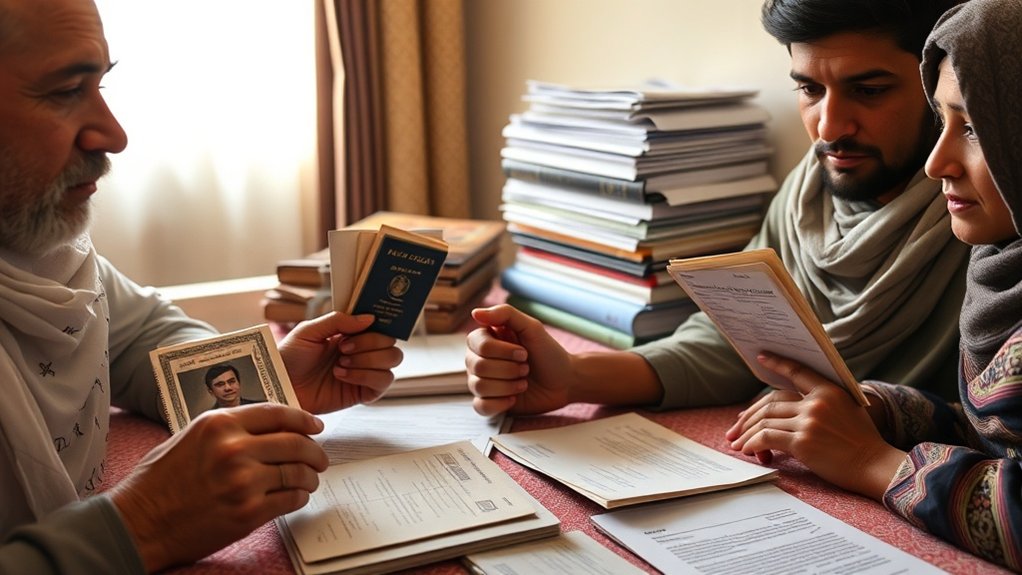
Key Documentation and Supporting Evidence
Average Wait Times and Processing Stages
When you submit a family reunification application, your case goes through several distinct processing stages, each with its own timeline and set of requirements. First, you’ll get a confirmation that your file’s received, which is crucial for tracking progress. Next, officials review your documents for completeness and eligibility. If all is in order, interviews and biometric appointments follow. Then, your case waits in queue for a decision. Processing times can fluctuate, often lasting from several months to over a year, depending on the country and office workload. It’s essential to monitor each stage and respond promptly to any requests. Engaging an immigration lawyer can help you avoid mistakes and handle documentation requirements more effectively throughout these various stages.Here’s what to expect during the process:- Application receipt and case number assignment
- Preliminary document and eligibility review
- Interviews and biometric data collection
- Security and background checks
- Final decision and notification on your application
Common Challenges and How to Overcome Them

Frequently Asked Questions
Can Reunified Families Access Public Healthcare in Portugal?
Yes, you and your reunified family can access public healthcare in Portugal once you’ve registered as legal residents. You’ll need to get a Número de Utente (healthcare user number) from your local health center. With this, you’ll receive medical care at public hospitals and clinics. It’s important to register soon after arrival so you don’t face any delays in healthcare services. Portugal’s system is generally accessible and affordable for residents.Are Language Classes Available for Arriving Family Members?
Yes, you can access language classes when you arrive in Portugal. The government and various organizations offer free or low-cost Portuguese language courses to help newcomers integrate. You’ll usually find these classes at public schools, community centers, or integration support offices. Signing up early helps you adjust faster, communicate better, and access work or education opportunities. Don’t hesitate to ask local authorities about available options in your area.What Housing Support Exists for Newly Arrived Afghan Families?
When you arrive, you can access housing support through refugee resettlement programs, local government agencies, or nonprofits. They’ll help you find temporary accommodation, then assist with longer-term housing options, like rented apartments. If you meet certain criteria, you might qualify for emergency housing or rental subsidies. These organizations also offer advice about leases and landlords, ensuring you understand your housing rights. Reach out early so you don’t face housing challenges alone.Can Children Attend School Immediately Upon Arrival?
Yes, your children can usually start attending school soon after you arrive. You’ll need to register them with the local school district, and they’ll help you through the process. Schools often offer language support and orientation to help your children adjust to their new environment. Make sure to bring any relevant documents, like identification and vaccination records, because they’ll be needed for enrollment. It’s best to contact the nearest school for specific guidance.Are Travel Costs Covered by the Portuguese Government?
No, the Portuguese government typically doesn’t cover travel costs for family reunification. You’ll need to pay for flights and any other travel expenses yourself. It’s important to budget for these expenses before starting the process. However, some humanitarian or refugee programs may offer limited financial assistance. Make sure you check with local organizations or NGOs, as they sometimes help families with travel costs in exceptional situations or urgent humanitarian cases.Conclusion
Navigating Afghan family reunification can feel overwhelming, but understanding the process helps you stay prepared. If you gather all key documents and respond promptly to requests, you’ll avoid unnecessary delays. Remember, every step—from application to interviews—matters for your family’s future. Stay proactive, communicate regularly with immigration authorities, and seek guidance when needed. With patience and perseverance, you’ll improve your chances of a smooth reunification and a brighter path forward together.